- Jun 25, 2019
- 1 min read
Version 7 Liebert Thing #4 Proof
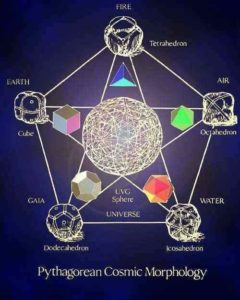
Pythagoras + Circle of Fifths
Dark Matter + AntiMatter
Metaphysics
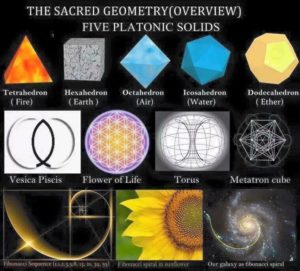
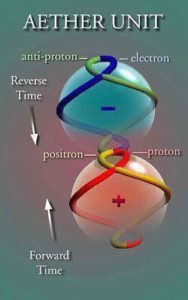
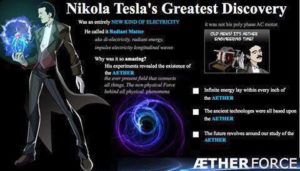
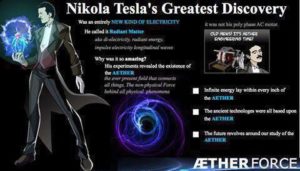
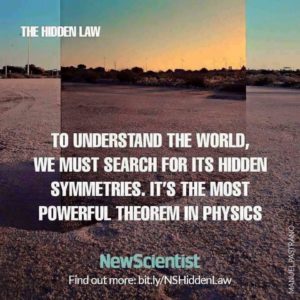
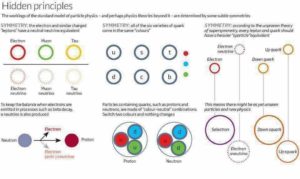
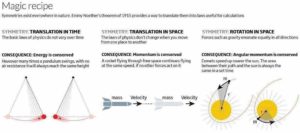
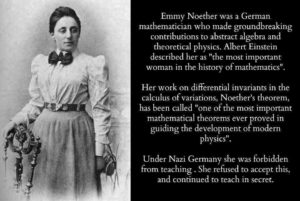
“Thing” and “fifth” (Tesla’s Aether is the 5th element in Alchemy) with Dark Energy and Dark Matter in Noether’s Symmetry Physics Theorem
Filling the void
Dark energy is an additional “thing” in the universe besides regular and dark matter. Two leading theories describe what it might be: a cosmological constant or something called quintessence.
The cosmological constant is considered a strong contender. Named after Einstein’s correction, it suggests that dark energy is the energy associated with the vacuum of space and has remained unchanged over the 14 billion years of the universe’s history.
Unchanging and uniformly distributed through space, it will continue to drive cosmic acceleration at a constant pace until the universe becomes a cold, lonely place where galaxies become too far apart to see.
Scientists favor the cosmological constant for its simplicity and because existing experimental evidence points to it. Despite its popularity, a major conceptual problem exists—it’s way smaller than it should be.
“The simplest quantum mechanical estimate would give you a number that’s enormous compared to the actual size of the cosmological constant if it’s dark energy,” describes Aaron Roodman, an experimental physicist at SLAC National Accelerator Laboratory. “How you end up with something that’s non-zero and really tiny is very mysterious.”
Some physicists suggest that the value is zero and that dark energy is something other than a cosmological constant. One possibility is that a field generates the energy driving cosmic acceleration; this is called quintessence, or the “fifth stuff.” Unlike the cosmological constant, it does not remain unchanging over time.
http://www.symmetrymagazine.org/article/june-2015/what-is-dark-energy


























Comments